

Finishing 12th board exams feels like relief for about a week. Then a new kind of stress starts: “What do I do now?”
You’ve probably heard a dozen opinions already. Your relatives want you to become a doctor or an engineer. Your friends are picking courses based on where their friend group is going. Coaching institutes want you to believe there are only three careers worth having.
None of that actually helps you make a decision you’ll be happy with five years from now.
This guide is built differently. Instead of dumping a list of a hundred career names on you, it starts with a simple framework for making the decision — then breaks down real career options after 12th for Science (PCM and PCB), Commerce, and Arts, plus newer career paths most guidance counsellors don’t mention yet.
Read it top to bottom, or jump straight to your stream. Either way, you’ll finish with a shortlist you can actually act on.
How to Choose the Right Career After 12th: A Simple Framework
Most career guides skip this part. They assume you already know what you want and just need a list of options. In reality, the list isn’t the hard part — the decision is.
Before you look at a single career option, run it through four questions.
1. What do you actually enjoy doing? Not what sounds impressive. Not what your parents enjoy. Think about the subjects, hobbies, or tasks that make time disappear for you — solving problems, talking to people, building things, writing, organising, designing.
2. What are you naturally good at? Interest and aptitude aren’t the same thing. You might enjoy watching medical shows but struggle with biology. Be honest about your strengths, not your fantasies.
3. Where is the market actually headed? Some fields are shrinking. Others — data, healthcare, design, sustainability — are growing fast. A career can look great on paper and still leave you short on opportunities if the industry itself is stagnant.
4. What can your family realistically support? Some paths, like medicine or design, involve years of expensive education before you earn anything. Others, like commerce or vocational courses, get you earning sooner. Neither is “better” — but ignoring the cost timeline causes real stress later.
Once you can answer these four questions honestly, the list below stops feeling overwhelming. You’ll know exactly what to look for.

Career Options After 12th Science (PCM)
If you took Physics, Chemistry, and Maths, your options go far beyond engineering — though engineering is still where most PCM students land.
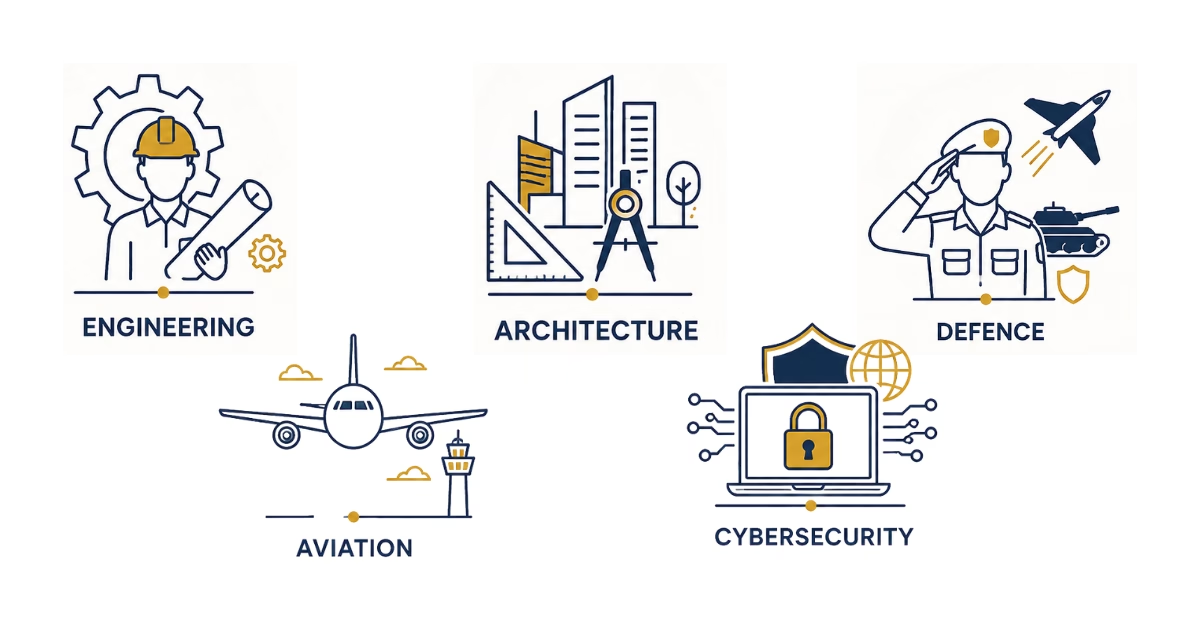
- Engineering (B.Tech/B.E.) — Computer Science, Mechanical, Civil, Electrical, Electronics, and newer specialisations like AI & Data Science. Entry via JEE Main/Advanced, state CETs, or private university exams.
- Architecture (B.Arch) — For students who enjoy design and maths equally. Entry via NATA or JEE Paper 2.
- Defence Services — NDA is open directly after 12th for PCM students who want a career in the Army, Navy, or Air Force.
- Merchant Navy — Marine engineering and nautical science courses, popular for early income and travel.
- Cybersecurity & Ethical Hacking — A fast-growing field for PCM students comfortable with computers, usually pursued through a diploma or after a CS degree.
- Commercial Pilot Training — Aviation-focused, expensive upfront but high-earning once licensed.
- Data Science & Statistics — A strong option if you enjoyed the maths more than the physics.
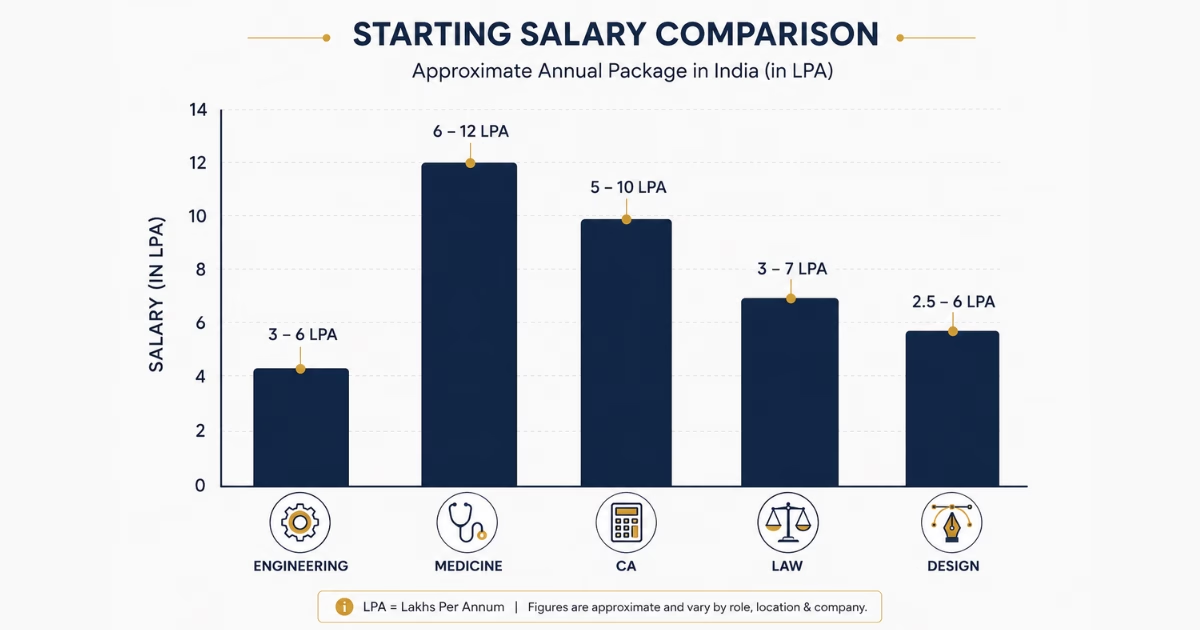
Typical fresher salary range: Roughly ₹3–8 LPA for most engineering roles, significantly higher in software and product companies for strong performers. Defence and merchant navy roles come with additional allowances and long-term job security.
Career Options After 12th Science (PCB)
Physics, Chemistry, and Biology open doors well beyond MBBS — which is good news, because medical seats are limited and NEET is extremely competitive.
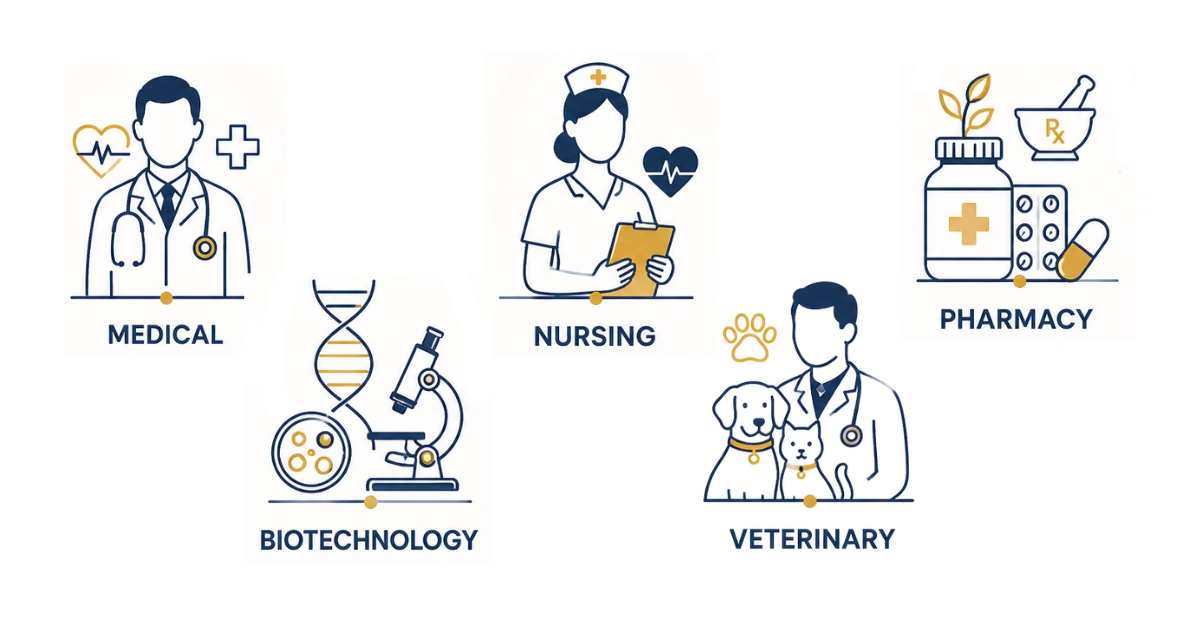
- MBBS / BDS — Still the most sought-after path, via NEET.
- Allied Health Sciences — Physiotherapy, Nursing, Occupational Therapy, Radiology, and Medical Lab Technology. Shorter courses, strong hospital demand, less competitive entry.
- Pharmacy (B.Pharm) — Leads to roles in drug research, hospital pharmacy, or the pharmaceutical industry.
- Biotechnology & Genetics — A growing field tied to research, agriculture, and pharma innovation.
- Nutrition & Dietetics — Rising demand as health awareness grows across India.
- Veterinary Science (B.V.Sc) — For students who want to work with animals rather than people.
- Forensic Science — A niche but growing field, especially as private forensic labs expand.
Typical fresher salary range: Highly variable — allied health roles start around ₹2.5–5 LPA, while doctors’ earnings scale up significantly after specialisation, though that takes several additional years of study.
Career Options After 12th Commerce
Commerce is often treated as the “safe” stream, but it actually has one of the widest ranges of career outcomes — from government-regulated professions to fast-moving finance careers.
With Maths:
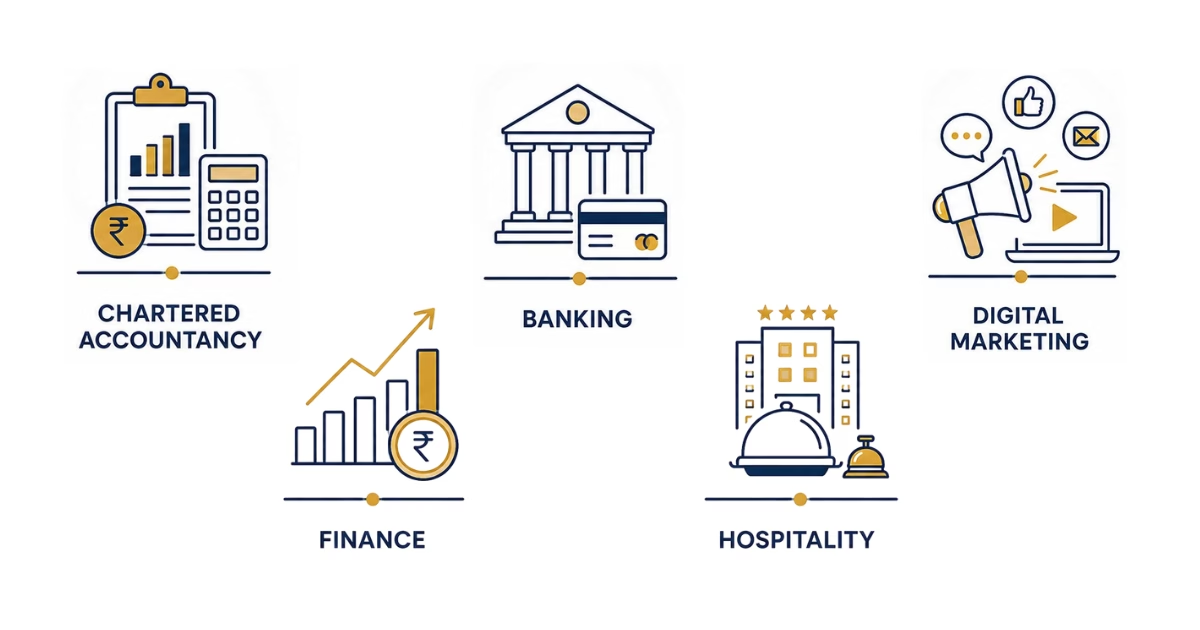
- Chartered Accountancy (CA) — India’s most respected finance qualification, but a long and demanding path of four to five years including articleship.
- Company Secretary (CS) & Cost & Management Accountant (CMA) — Similar prestige to CA, with a different focus area.
- B.Com (Hons) / Economics — A strong foundation for further studies in finance, analytics, or an MBA.
- Actuarial Science — High-paying, maths-heavy, and far less crowded than CA.
- Investment Banking & Financial Analysis — Usually pursued after a B.Com or BBA, often paired with a certification like CFA.
Without Maths:
- BBA / BMS — A business management foundation, popular for students planning an MBA later.
- Hotel Management — Strong hospitality industry demand, including international opportunities.
- Mass Communication & Journalism — For commerce students drawn to media rather than numbers.
- Company Secretary (alternate route) — Still possible without maths, though the CS Foundation exam is easier with a maths background.
- Digital Marketing — One of the fastest-growing, low-barrier-to-entry career paths for commerce students today.
Typical fresher salary range: CA, CS, and CMA professionals often start at ₹7–12 LPA post-qualification. BBA and general commerce graduates typically start lower, around ₹3–6 LPA, but grow quickly with an MBA or certifications.
Career Options After 12th Arts and Humanities
Arts is the most misunderstood stream in India — often chosen by default rather than by choice, even though it leads to some of the country’s most respected careers.
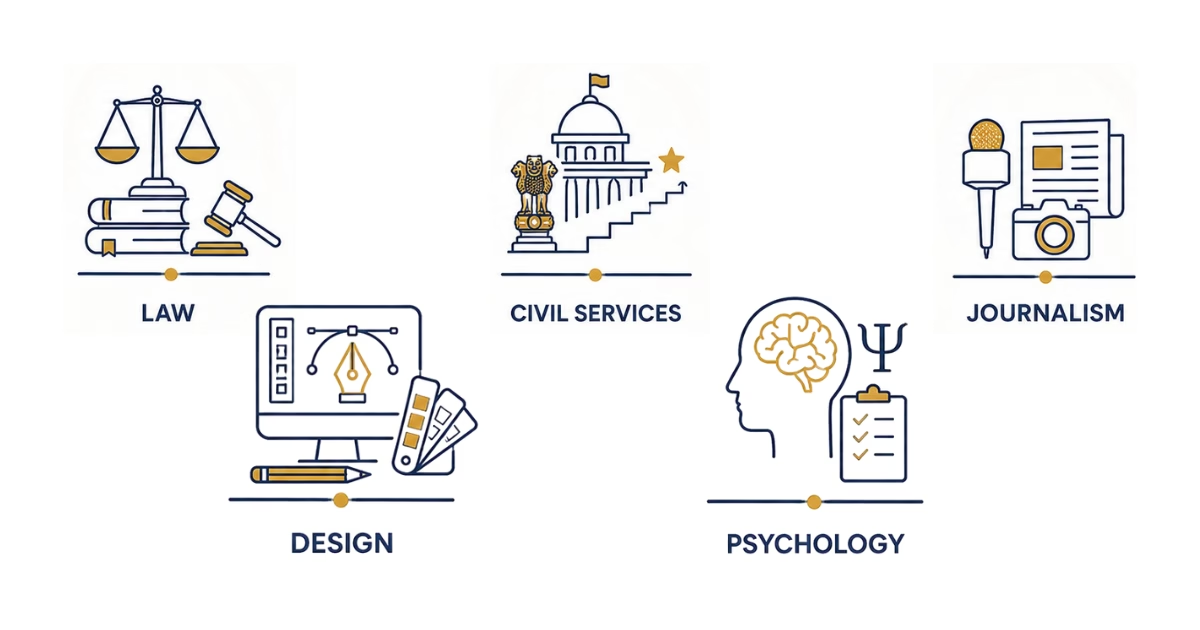
- Law (BA LLB) — A five-year integrated degree via CLAT or university-level entrance exams. Leads to litigation, corporate law, or the judiciary.
- Civil Services (UPSC/State PSC) — Arts graduates, especially in History, Political Science, and Sociology, dominate this space because the syllabus overlaps heavily with humanities subjects.
- Psychology — Rapidly growing demand for counsellors and therapists as mental health awareness increases in India.
- Design (Fashion, UX/UI, Graphic, Interior) — Entry via NIFT, NID, or private design schools. A strong creative and commercial career.
- Journalism & Mass Communication — Print, digital, or broadcast media.
- Social Work (BSW/MSW) — For students drawn to NGO, policy, or community development work.
- Foreign Languages — French, German, Japanese, Korean, or Spanish, opening roles in translation, tourism, aviation, and international business.
- Liberal Arts (BA Hons) — Increasingly available at multidisciplinary universities, keeping options open before you specialise.
Typical fresher salary range: Wide variation — design and law can start at ₹4–8 LPA in good firms, while civil services offers government pay scales plus significant long-term stability and status.
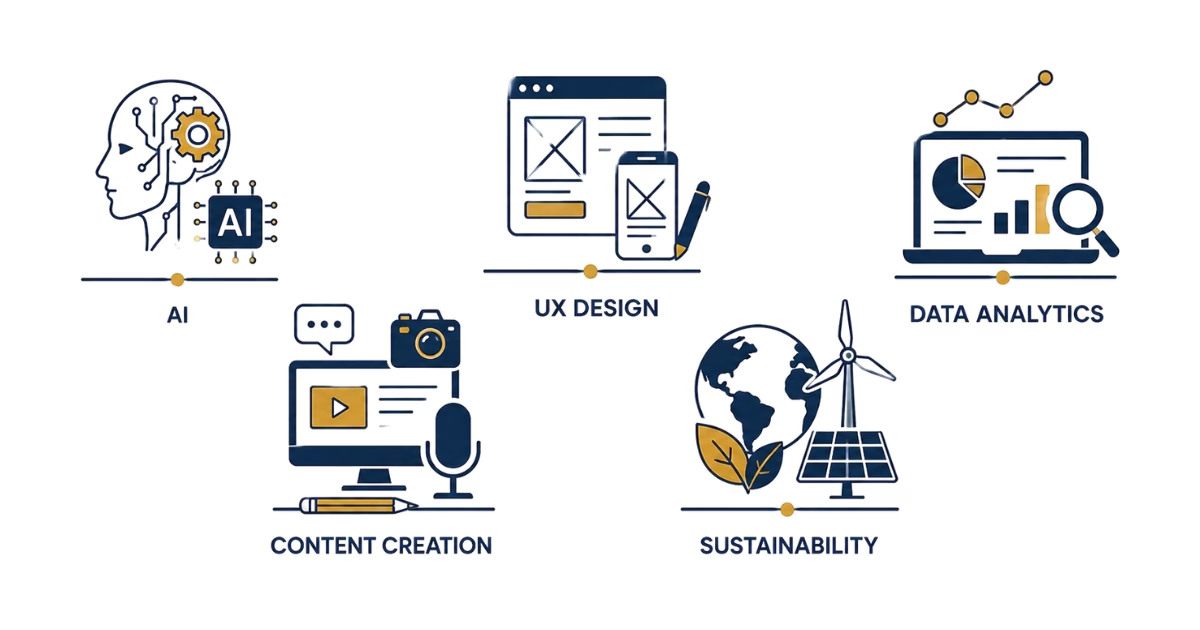
New-Age Career Options After 12th (Emerging & Stream-Agnostic)
These careers don’t care which stream you came from as much as they care about your skills. Most are pursued through certifications, bootcamps, or specialised undergraduate programmes rather than traditional degrees.
- UX/UI Design — Fast-growing as every company builds digital products.
- Data Analytics — Open to Commerce, Science, and even Arts students comfortable with numbers and tools like Excel, SQL, and Power BI.
- Content Creation & Digital Marketing — Low barrier to entry, genuinely merit-based, and increasingly a real career rather than a hobby.
- Product Management — Usually a second career after three to five years in tech, design, or business, but worth knowing about early.
- Sustainability & ESG Careers — A newer field driven by corporate climate commitments.
- Entrepreneurship — No longer a “fallback” option — India’s startup ecosystem has made this a legitimate first choice for the right personality type.
Skill-Based Courses and Diplomas After 12th (Without a Degree)
A four-year degree isn’t the only path to a stable career. If you want to start earning sooner, or a traditional degree doesn’t excite you, these are worth considering.
- Polytechnic Diplomas — Engineering diplomas that lead directly to jobs or lateral entry into a B.Tech second year.
- ITI Courses — Trade-focused, government-recognised, strong for electrician, fitter, and technician roles.
- Skill India / NSDC Certifications — Short, industry-aligned courses across sectors like retail, healthcare support, and IT.
- Animation & VFX Diplomas — For creative students who don’t want a full design degree.
- Culinary Arts Diplomas — A faster route into hospitality than a full hotel management degree.
- Coding Bootcamps — An increasingly common alternative entry into tech roles, especially for Commerce and Arts students.
ALSO READ: Diploma in Civil Engineering: Complete Guide to Career, Admission & Opportunities in 2025
ALO READ: Best Skills to Learn in 2026 for Students: The Complete Market-Backed Career Guide
Government Job Options After 12th
Government jobs remain some of the most popular career options after 12th in India, thanks to the stability and structured growth they offer. Rather than chasing this year’s specific notifications, which change constantly, here’s how to think about the categories:
- Defence — Army, Navy, Air Force, and Coast Guard through NDA and other direct-entry schemes.
- Banking — Clerk and PO-level positions through IBPS and SBI exams, usually after a bachelor’s degree, though some clerical entries open earlier.
- Railways — Technical and non-technical posts through RRB exams.
- Central Armed Police Forces — Constable and officer-level entries through SSC and UPSC.
- State and Central Government Clerical Roles — Through SSC CHSL and state-level equivalents.
For all of these, check the official recruitment body’s website — UPSC, SSC, IBPS, or RRB — directly for current notifications rather than relying on secondary sources.
Career Options After 12th: Salary and Growth Comparison
| Career Path | Typical Fresher Salary (Approx.) | Growth Potential | Time to First Job |
|---|---|---|---|
| Engineering (B.Tech) | ₹3–8 LPA | High, especially in tech | 4 years |
| Medicine (MBBS) | Stipend during internship | Very high after specialisation | 5.5+ years |
| Chartered Accountancy | ₹7–12 LPA | High | 4–5 years |
| Law (BA LLB) | ₹4–8 LPA | High in corporate law | 5 years |
| Design (UX/Fashion) | ₹3–6 LPA | High, fast-growing field | 3–4 years |
| BBA/B.Com | ₹3–6 LPA | Moderate, boosted by MBA | 3 years |
| Government Jobs (SSC/Banking) | ₹3–7 LPA + benefits | Stable, slower growth | Varies |
| Skill-Based Diploma | ₹2–5 LPA | Moderate, faster entry | 1–2 years |
Figures are indicative approximations based on typical entry-level ranges across Indian companies, and vary by city, company, and individual performance.
Quick Self-Assessment: Which Career Path Fits You?
Answer these honestly before moving forward:
Common Mistakes to Avoid When Choosing a Career After 12th
- Choosing based on peer pressure. Just because your friend group is doing engineering doesn’t mean it’s right for you.
- Ignoring your own aptitude. Loving a subject and being good at it are different things — be honest about both.
- Underestimating the cost and time commitment. Some careers take years longer to start earning. Plan for that reality.
- Treating Arts as a “backup” stream. Some of the most competitive, well-paying careers in India come from Humanities.
- Not researching beyond the top three known options. Most students only know about Engineering, Medicine, and CA — this guide alone lists over forty other paths.
- Making an irreversible decision under pressure. Most career paths have lateral entry points and switching options later. It’s rarely as final as it feels right now.

Frequently Asked Questions
What is the best career option after 12th in India?
There’s no single “best” option — it depends on your interests, aptitude, and financial situation. Engineering, medicine, CA, law, and design are popular, but dozens of other paths offer strong outcomes for the right person.
Which career after 12th has the highest salary?
Fields like software engineering, chartered accountancy, investment banking, and specialised medicine tend to offer the highest long-term earning potential, though they also require significant time and effort upfront.
What can I do after 12th if I’m confused about my career?
Start with the decision framework in this guide — interest, aptitude, market demand, and financial fit. Talking to a career counsellor and trying short internships or online courses in two or three fields can also help you decide with more confidence.
Can I change my career path later if I choose wrong after 12th?
Yes. Most fields have lateral entry options, and many professionals switch careers entirely later in life. A degree gives you a direction, not a life sentence.
What are good career options after 12th Commerce without maths?
BBA, Hotel Management, Mass Communication, Digital Marketing, and Company Secretary, via the alternate entry route, are all strong options that don’t require a maths background.
Is Arts a good stream for career growth?
Yes. Law, civil services, psychology, design, and journalism — all strong, respected career paths — come from the Arts stream. It’s one of the most underrated streams in Indian education.
What government jobs can I get right after 12th?
Defence services via NDA, certain clerical and constable-level roles, and some technical posts in railways are open directly after 12th. Most other government jobs require a bachelor’s degree first.
Final Thoughts
There’s no perfect career, and there’s no deadline that says you must have it all figured out this month. What matters is making the decision using an honest framework — not fear, not comparison, not pressure from people who aren’t the ones living your life.
Pick two or three career options after 12th from this guide that genuinely interest you. Talk to people already working in those fields. Then commit, knowing you can always adjust course later.